
Prof. Lisandra Meneses, Visiting Professor at the Estonian University of Life Sciences (EMU), travelled to Halle (Saale), Germany, to represent the university at the official kickoff meeting of the project TRANSATION — TowaRds Agroecological farmiNg Systems for innovATION and sustainability.
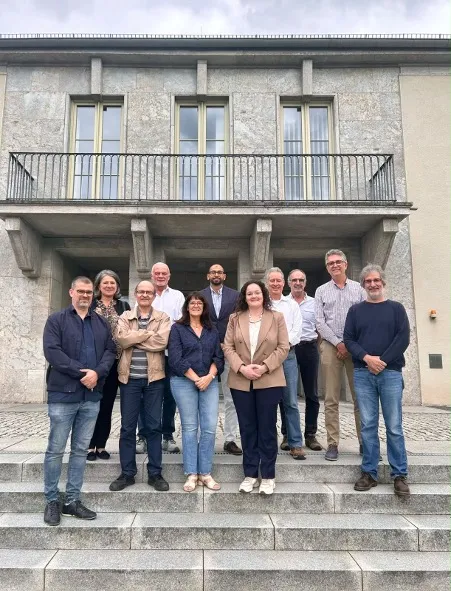
The meeting was hosted at the Leibniz Institute of Agricultural Development in Transition Economies (IAMO). Prof. Meneses joined the project partners from Italy, Spain, Portugal, and France to align on the project's goals, work plan, and collaborative structure for the years ahead, marking EMÜ's formal entry into this new European consortium.
This new international research project addresses one of the most pressing challenges facing European agriculture: building resilient, sustainable farming systems in the face of accelerating climate change. The project responds to a growing threat to food security in the Mediterranean region, where water stress, erratic rainfall, and soil degradation, all intensified by rising temperatures and sea levels, are undermining agricultural productivity. Rather than pursuing a single technical fix, the project takes an integrated approach, combining multi-cropping systems, stress-resistant crop varieties, precision irrigation, and biological soil management, all tested and refined within "Living Labs" where farmers, researchers, policymakers, and value-chain actors co-design solutions together.
Within the consortium, Prof. Meneses will lead EMU's contribution to the project: the production of biochar from agricultural residues, for field application across pilot sites in France, Italy, and Portugal. This builds directly on her established expertise in biomass pretreatment and valorisation, developed over nearly a decade of international research in Estonia, the United Arab Emirates, Poland, and Canada. Her work within TRANSATION will help close the loop between agricultural waste and soil health, converting a residual stream into a resource that improves soil resilience, carbon storage, and reduces the need for chemical inputs, which directly supporting the project's agroecological goals.
Editor:

Communications Manager of Engineering
Institute of Forestry and Engineering
Administration of the Institute of Forestry and Engineering
5294610
5294610