
Lignocellulosic biomass, the main feedstock for biorefineries, is made up of three major components: lignin, cellulose, and hemicellulose. Historically, biorefineries have focused on extracting sugars from cellulose and hemicellulose to produce biofuels, and, to a lesser extent, chemicals, and materials. In this process, lignin was often viewed as a by-product or waste, typically burned for heat and energy generation.
Workgroup of Biofuels was established in 2007, with its initial research activities focussing on solid biofuels. By 2008, the research scope expanded to include liquid biofuels. In 2011, the research group started working on bioethanol production and biomass pretreatment techniques, in response to the industrial shift towards advanced biofuel technologies and growing interest in diverse, sustainable biomass resources.
In 2013, microalgal technology for biofuel development was included in the research areas of the group, which was strengthened by the design and development of a microalgal photobioreactor system.
2013 was a key year for biomass pretreatment as well, signified by the development of the proprietary, patented, chemical-free technology called nitrogen explosive decompression, wherein biomass is saccharified by the use of pressure, for further use in biorefineries.
By 2016, the focus broadened to encompass waste feedstock utilization and subsequent biogas production, demonstrating our commitment to exploring new pathways for bio-product recovery from sustainable resources such as paper and pulp sludge.
Since 2018, the importance of process integration for biomass fractionation was recognized, leading to the development of integrated pathways to optimize biomass utilization by minimizing inhibitors of bio-product formation and combining pre-treatments to by-pass several steps, thereby saving on process costs via highly efficient processing.
Since 2021, our research encompasses a comprehensive framework, emphasizing the production of high-value biochemicals, such as biosurfactants from wood waste as well as lignin fractionation and valorisation, underlining and maximizing the value of complete utilization of all fractions of waste lignocellulosic biomass. The production of high- and low- molecular weight biosurfactants from torrefied wood waste biomass was patented, leading to new pathways of high-value specialty chemical production.
Our work on lignin valorisation using the green chemicals called ionic liquids has attracted several national and international accolades and attention. This has also led us to pursue innovative strategies including lignin-based drugs and cellulose based platform chemicals, supported by our newest grant.
This progressive trajectory showcases the workgroups commitment to advancing bioenergy, biochemical, and specialty chemical research through continuous innovation and expanding expertise.
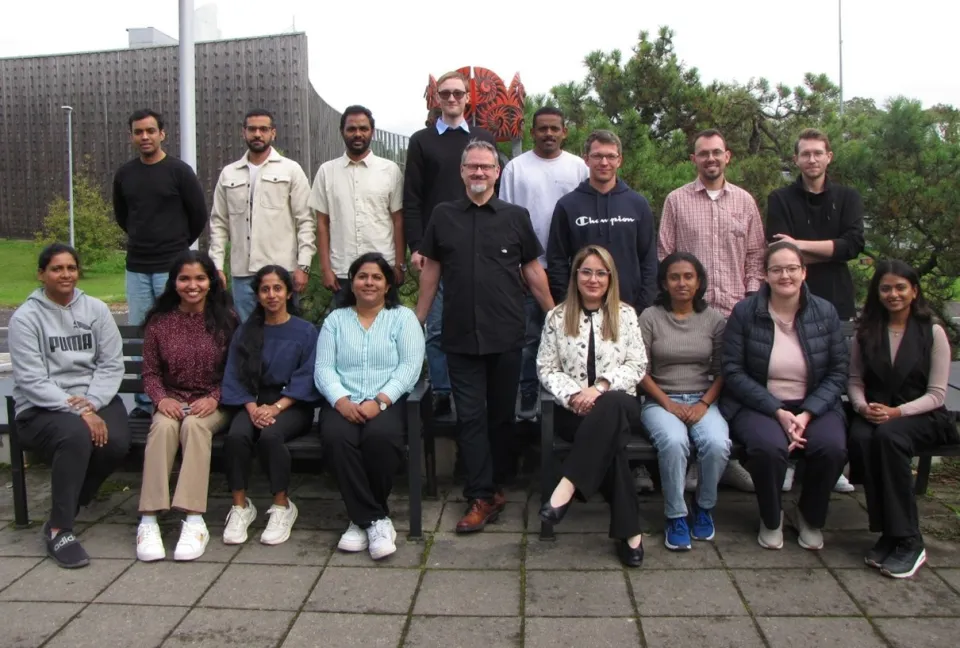
Members of the work group:
- Professor Lisandra Marina Da Rocha Meneseslink opens in new page,
- Assistant Professor (tenure track) Sabarathinam Shanmugamlink opens in new page,
- Assistant Professor Renu Geetha Bailink opens in new page,
- Appointed Research Fellow Vahur Roonilink opens in new page,
- Postdoctoral Research Fellow Udayakumar Veerabagulink opens in new page,
- Postdoctoral Research Fellow Banafsheh Khalegh Doustlink opens in new page,
- Postdoctoral Research Fellow Sharib Khanlink opens in new page,
- Postdoctoral Research Fellow Gowsika Jaikumar,
- Postdoctoral Research Fellow Vineesh Nedumpally,
- Postdoctoral Research Fellow Filipe Martim Pacheco Arruda,
- Postdoctoral Research Fellow Wiktor Marcin Pacura
- Junior Researcher Anjana Harilink opens in new page,
- Junior Researcher Ahmed Aboulmagd Abdelqader Hassanlink opens in new page
- Junior Researcher Annika Jaanimägilink opens in new page,
- Junior Researcher Chamini Lakshika Wickramarathna Dissanayakelink opens in new page,
- Junior Researcher Damaris Chinwendu Okaforlink opens in new page,
- Junior Researcher Johannah Mulakal,
- Junior Researcher Reynald Songphon Pontélink opens in new page,
- Junior Researcher Salini Chandrasekharan Nairlink opens in new page,
- Junior Researcher Viveka Balasundararajanlink opens in new page,
- Visiting researcher Jon Ender,
- Analyst Kaie Ritslaidlink opens in new page,
- Specialist Henn Kaaleb Humal,
- Specialist Kristofer Jallai,
- Specialist Surya Mudavasseril Sudheerlink opens in new page,
- Student Kirill Fatun
Head of the work group Tenured Professor Timo Kikaslink opens in new page.

Lignin Valorization Research at the Chair of Biosystems Engineering
At the Chair of Biosystems Engineering, our research team—led by Tenured Asst. Prof. Sabarathinam Shanmugam under the academic leadership of Chair Prof. Timo Kikas—is focused on unlocking the potential of lignin, one of the most abundant and underutilized components of biomass. Our work centers on creating sustainable solutions for the separation, transformation, and application of lignin in advanced biorefinery systems.
We develop environmentally friendly methods for lignin separation using ionic liquids and greener solvents, aiming to improve efficiency, selectivity, and recyclability. Our team also applies enzymatic, biological, and electrochemical depolymerization techniques to break down lignin into valuable aromatic building blocks, ready for further use in high-performance applications.
This research is supported by prestigious national and international initiatives, including the EEA Grant of Iceland, Liechtenstein and Norway, Estonian Research Council (PRG grants), Erasmus+ mobility programs, and COST Action networks. We maintain strong international collaborations with leading institutions including SINTEF (Norway), INRAE (France), Saarland University (Germany), Aalto University (Finland), KTH Royal Institute of Technology (Sweden), and. Riga Technical University (Latvia). These collaborations allow us to co-develop scalable and impactful technologies for the bio-based economy.
We embrace the “Lignin-First” approach, integrating lignin-derived materials into cutting-edge areas such as drug synthesis and delivery, 3D/4D printing, renewable energy storage, and platform chemical production. In parallel, we are committed to side-stream valorization, ensuring that every fraction of biomass is utilized sustainably and efficiently.
Our work contributes directly to the EU’s goals for circular bioeconomy, renewable chemical production, and green pharmaceuticals, and aligns closely with the European Green Deal by promoting cleaner, bio-based industrial solutions. We welcome collaboration with researchers, companies, and institutions interested in building a more sustainable and circular future.

Biomass pretreatment
Our laboratory offers specialized biomass pretreatment services utilizing Nitrogen Explosive Decompression (NED), a highly effective method to enhance the biodegradability of lignocellulosic materials. In this process, biomass is exposed to high-pressure nitrogen gas and then subjected to rapid decompression. The sudden release of pressure causes the biomass structure to rupture, breaking down the complex matrix of hemicellulose and lignin. This disruption significantly improves the efficiency of subsequent biochemical conversion processes such as anaerobic digestion, enzymatic hydrolysis, and fermentation.
The NED pretreatment is particularly suitable for a wide range of organic feedstocks including agricultural residues (such as wheat straw, corn stover, and rapeseed straw), forestry by-products (wood chips, sawdust, bark), and agro-industrial waste (spent mushroom substrate, pulp sludge, and fruit peels). The process requires no chemical additives, making it environmentally friendly and easily integrable into sustainable biorefinery and circular economy models.
Our facility supports both research and industrial-scale testing, providing customizable pretreatment parameters based on specific biomass types and downstream application goals. Whether you're developing a new bioenergy process or optimizing existing feedstock conversion, our NED service offers a reliable, scalable solution to unlock the full potential of lignocellulosic biomass.

Fermentation
The Fermentation laboratory in the Chair of Biosystems Engineering specializes in the microbial production of high-value specialty chemicals such as biosurfactants and biopolymers, derived entirely from different waste-streams. Building on its foundations in bio-ethanol fermentation for biofuel applications, the lab has evolved, shifting its research focus toward high-value, sustainable, and non-polluting bio-based products made from natural microbial processes.
Our facility is designed to process complex waste streams, primarily lignocellulosic biomass (such as agro-forestry residues and timber industry waste), as well as industrial aqueous waste (rich in organic content), and municipal food waste. These substrates are pretreated through a variety of thermochemical methods such as torrefaction and nitrogen explosive decompression, followed by enzymatic hydrolysis to yield fermentable sugars and nutrients suitable for microbial cultivation. We employ a range of microbial strains selected for their robust metabolic profiles and natural ability to synthesize useful compounds such as rhamnolipids, sophorolipids, and polyhydroxyalkanoates (PHA). The use of non-pathogenic and non-genetically engineered strains ensures regulatory compliance and lowers barriers for commercialization.
Our lab is equipped with lab-scale bioreactors integrated with precise control systems for pH, temperature, dissolved oxygen, and agitation, incubator shakers, incubators, autoclaves, and biosafety cabinets for microbial handling and cultivation and refrigerated centrifuges, ultrafiltration systems, solid phase extraction systems, column chromatography, and rotary vacuum evaporators for downstream processing. Through continued research collaborations, our analytical capabilities are supported by high-performance liquid chromatography-mass spectrometry (HPLC-MS), gas chromatography-mass spectrometry (GC-MS), Fourier-transform infrared spectroscopy (FTIR), and surface tension analyzers for product characterization and quality control. We have longstanding national and international collaborations with University of Tartu, NTNU (Norway), and NOVA-FCT (Portugal).
By harnessing waste as a resource and leveraging the natural biosynthetic capabilities of safe microbes, our lab is a model of circular bioeconomy in action, offering a versatile platform for green manufacturing and waste valorization.
The lab welcomes passionate students and academic and industry collaborators who are eager to contribute to the advancement of sustainable bioprocessing. Join us in transforming waste into value and shaping the future of green innovation through microbial fermentation.

Microalgae for a Sustainable, Climate Neutral Future
At the Chair of Biosystems Engineering, Estonian University of Life Sciences, our microalgal research team develops innovative methods to convert industrial waste into high-value algal biomolecules that support human health, sustainable food systems, and climate resilience. By combining waste recycling with advanced biomass production, we contribute to the circular bioeconomy and offer solutions for climate change mitigation.
Our work focuses on waste valorization and sustainable microalgal bioproducts. We explore the use of industrial flue gas, torrefaction byproducts, and algal spent media to boost algal growth and resource efficiency. Flue gas, a major CO₂ source, is repurposed as a carbon feedstock for algae, aiding carbon capture. Torrefaction condensate, derived from biomass conversion, serves as a nutrient-rich additive, supporting circular economy goals. We also study algal spent media for extracting extracellular vesicles with potential therapeutic applications.
The produced algal biomass is analyzed to identify and optimize high-value compounds, including vitamins, pigments, polysaccharides, and antioxidants for use in nutraceuticals, aquafeed, biofertilizers, cosmetics, and pharmaceuticals. Notably, our work on converting algal sterols into Vitamin D₃ highlights microalgae as a sustainable, non-animal source of this vital nutrient. Our facilities include a patented 300 L rotating photobioreactor for pilot-scale cultivation and applied research.
Our projects are funded by national and international agencies, including the Estonian Research Council (PSG971), Horizon Europe’s AlgaePro BANOS, and ERA-NET BLUE BIO Cofund. Strong collaborations with institutional and industry partners ensure that our research meets real-world needs.
Our work supports the EU’s 2050 carbon neutrality goals by recycling CO₂ and biomass waste, and producing resource-efficient algal products. Through microalgal innovations, we help build greener supply chains in nutrition, aquaculture, and agriculture. Our research also advances key UN Sustainable Development Goals, including SDGs 3, 9, 12, and 13, underscoring our commitment to a sustainable and resilient future.

Thermochemical Valorization Research Group
Our research group focuses on the development and optimization of thermochemical conversion technologies for transforming biomass and other carbon-rich materials into valuable products and renewable energy sources. Our goal is to contribute to sustainable energy solutions and a circular, low-carbon economy.
We specialize in the following key processes:
Torrefaction
A mild thermal treatment (200–300 °C) in an inert atmosphere that enhances the fuel properties of biomass. The resulting solid biofuel is more energy-dense, water-resistant, and easier to grind and transport.
Pyrolysis
Thermal decomposition of organic materials in the absence of oxygen (typically at 300–700 °C), producing bio-oil, biogas, and biochar. We study how process conditions affect product yields, properties, and potential applications in energy, agriculture, and the chemical industry.
Gasification
High-temperature conversion (800–1200 °C) of carbonaceous materials into synthesis gas (mainly CO and H₂) under limited oxygen supply. Syngas can be used for generating electricity, heat, biofuels, or as a building block in the chemical industry.
In addition to experimental research, we work on reactor design, process modeling, and advanced analytical methods to better understand the fundamental mechanisms behind these thermochemical processes.
We collaborate with universities, research institutions, industry partners, and policymakers to ensure that our scientific work leads to real-world impact, supporting the development of clean technologies and the broader goals of climate neutrality and resource efficiency.

Research Infrastructure Roadmap Object – PUUTAR
Wood is Estonia’s most important bio-based raw material. Its skilled valorisation can produce high value-added and carbon-sequestering products across numerous sectors. The new research infrastructure PUUTAR unites 14 laboratories or departments across 8 institutes from 3 universities. This shared infrastructure will create synergy that enables top-level interdisciplinary R&D in the field of wood valorisation. The research and development activities will span the mechanical, chemical, and biochemical valorisation of both high-value construction timber and lower-grade raw material and secondary wood. Application areas include construction and furniture manufacturing, high-value-added chemicals, novel biomaterials, bioplastics, and even military technologies. The PUUTAR infrastructure will also play a crucial role in training the next generation of scientists and in establishing a strong foundation for international collaboration. By bringing together the combined expertise of Estonia’s leading universities, PUUTAR lays the groundwork and support structure for elevating the Estonian wood industry to a new level.
At the Estonian University of Life Sciences (EMU):
Thermochemical Valorisation Platform: This platform includes torrefaction and pyrolysis reactors for processing biomass at a wide range of temperatures. The system features a reactor equipped with sensors, controllers, analyzers, a cooler, and gas-cleaning systems. The reactor is integrated into several research projects and is used in collaboration with the University of Tartu (UT), TalTech, and Tallinn University (TLU). Companies involved include Baltania, Green Marine, and various agricultural enterprises.
Biomass Gasification Platform: The gasification infrastructure includes equipment and systems for converting biomass or bio-waste into synthesis gas (a mixture of CO and H₂). Key components include gas generator and gas cleaning system. This pilot-scale platform enables the use of syngas for energy production, in the chemical industry, or as a feedstock in other processes, while reducing environmental impact compared to traditional combustion methods. The platform enables collaboration with VTT (Finland), the thermal valorisation lab, UT, TalTech, and NTNU (Norway). EMU also collaborates with BRD Minerals. Additionally, two new gasification-based wood valorisation plants—Power2X and BioJet—are emerging in Estonia. Both represent innovative technologies and will require development support in the future.
