
On Wednesday, 26 August, Agnes Sepaste defended her doctoral thesis, “Carbon fluxes and stocks in Estonian coniferous and mixed stands and the effect of different harvesting methods on carbon sequestration”, at the Estonian University of Life Sciences. The thesis focused on the carbon cycle in Estonian forests, how forest age and how different harvesting methods affect carbon sequestration.
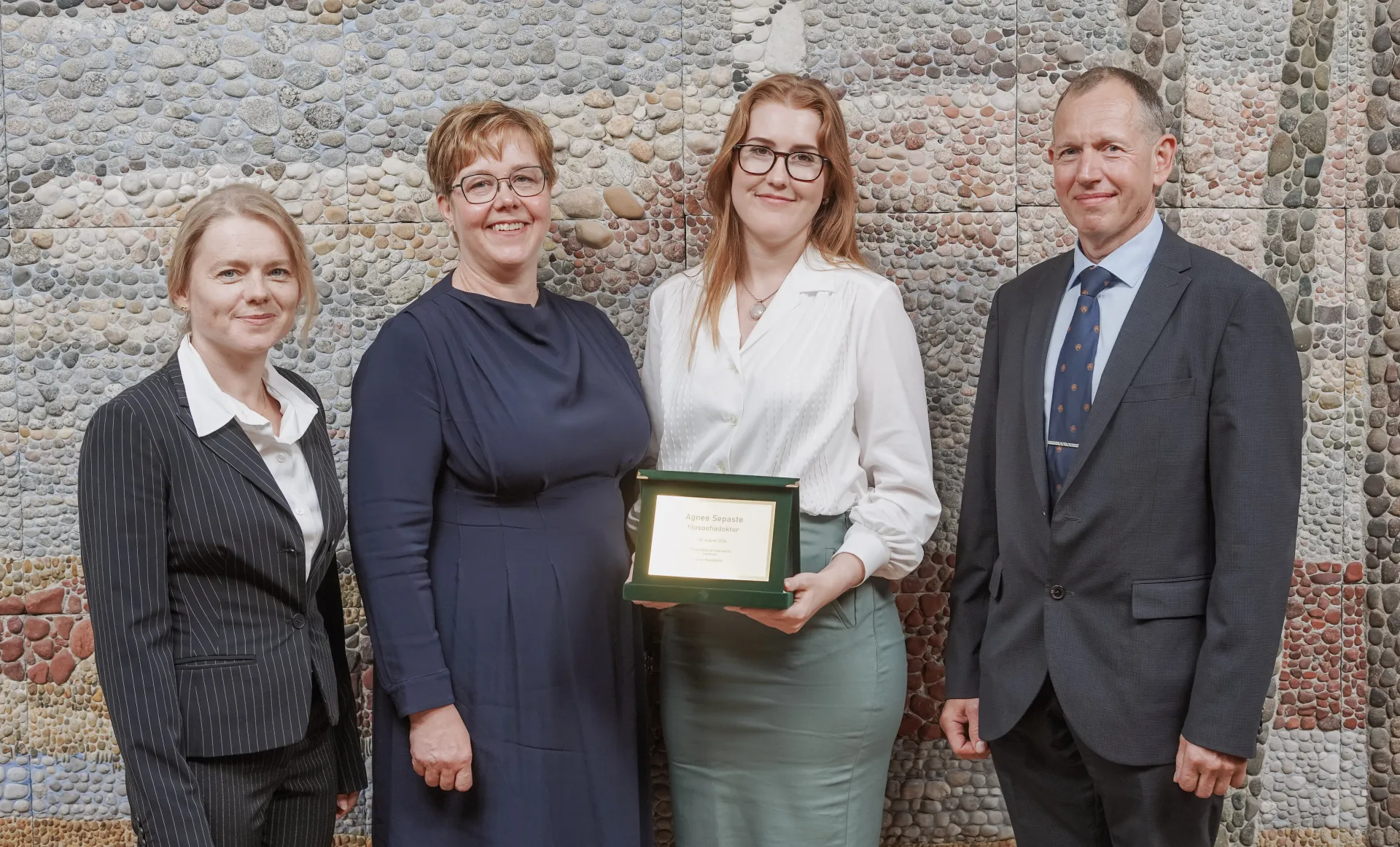
The doctoral thesis was supervised by Professor Veiko Uri and Research Fellow Mai Kukumägi. The opponent was PhD Saija Huuskonen, from Metsähallitus, Finland.
Northern European forestry has traditionally focused on the cultivation of even-aged coniferous stands. Due to changing climatic conditions, growing mixed stands and maintaining continuous forest cover have received increasing attention. At the same time, knowledge about the effects of mixed forests and continuous-cover forestry on forest productivity and the carbon (C) balance remains relatively limited.
In her doctoral thesis, Sepaste investigated carbon sequestration in Estonian forests of different ages and species compositions, as well as how the forest carbon balance changes after harvesting. The results show that a forest’s capacity to sequester carbon depends on the age and composition of the stand as well as the harvesting method used.
The thesis also examined the effects of different harvesting methods on the carbon balance of pine forests by comparing selective cutting with clear-cutting. Following clear-cutting, the study sites became carbon sources because the removal of a large proportion of growing trees caused a sharp decline in carbon sequestration. With selective cutting, some trees remained standing and continued to sequester carbon, meaning that the impact of harvesting on the forest carbon balance was smaller.
However, the study also showed that a forest does not necessarily remain a carbon sink after selective cutting. Following harvesting, the forest carbon balance depends on several processes, including the growth of the remaining trees and understory vegetation, as well as the amount of carbon released from the soil. This demonstrates that assessing the impact of harvesting methods requires consideration of the carbon cycle of the entire forest ecosystem, rather than only the carbon stored in trees.
Agnes Sepaste’s doctoral thesis contributes to a better understanding of the role of Estonian forests in carbon sequestration and of how forest development and management affect their carbon balance. The results provide valuable knowledge for more accurate assessments of forest carbon sequestration and for evaluating the climate impacts of forest management.
The doctoral thesis is available in the Estonian University of Life Sciences digital repository, EMÜ DSpacelink opens in new page.
Editor

Research Communication Specialist
Rector's Area of Responsibility
Department of Marketing and Communication
53585680
53585680More information

Appointed Research Fellow in Silviculture
Institute of Forestry and Engineering
Chair of Silviculture and Forest Ecology
